Go to slide:
- 1
- 2
Thinking about the work done so far on the collection cases and how we can include recipes within these cases we wanted to have a session where we looked at historic recipes. We asked Linda, our Community Curator and founder of Speaking of Food to lead this session, and as part of her research she visited our Local Studies archive on a few occasions to look through the historic local recipe books we had. One of these books was from the 1800s and was handwritten with recipes from various people over the years. This book has been sent off for conservation as it needed some repair.
We were also considering things that could be on the menu, that might be modernised or adapted to people’s personal tastes.
Linda picked the following recipes to try:
Pea Soup, Pan Haggerty, Black Peas and Gingerbread
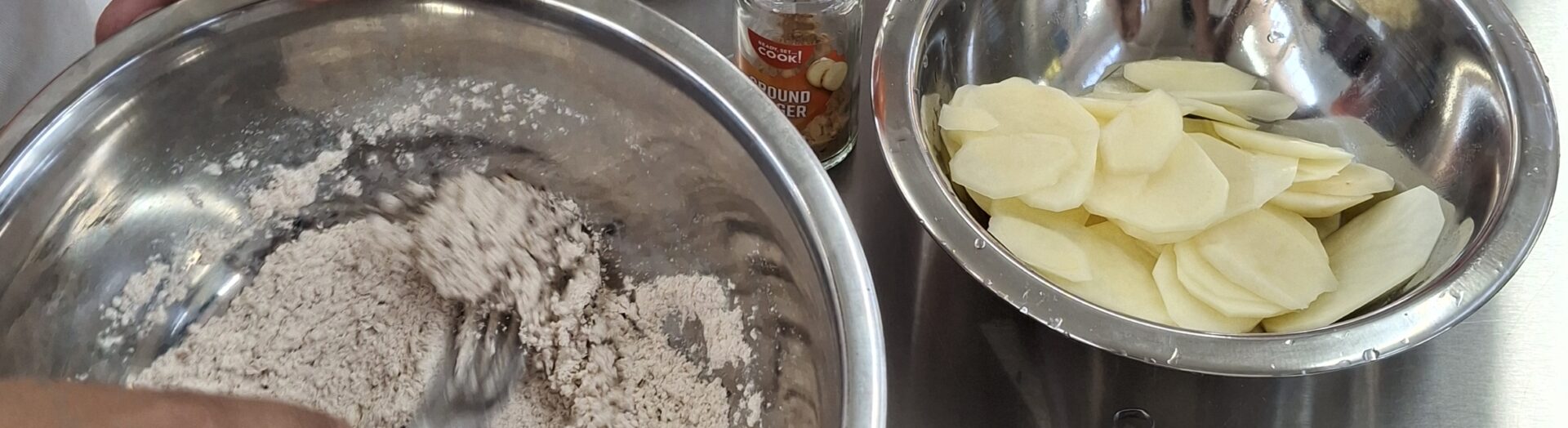
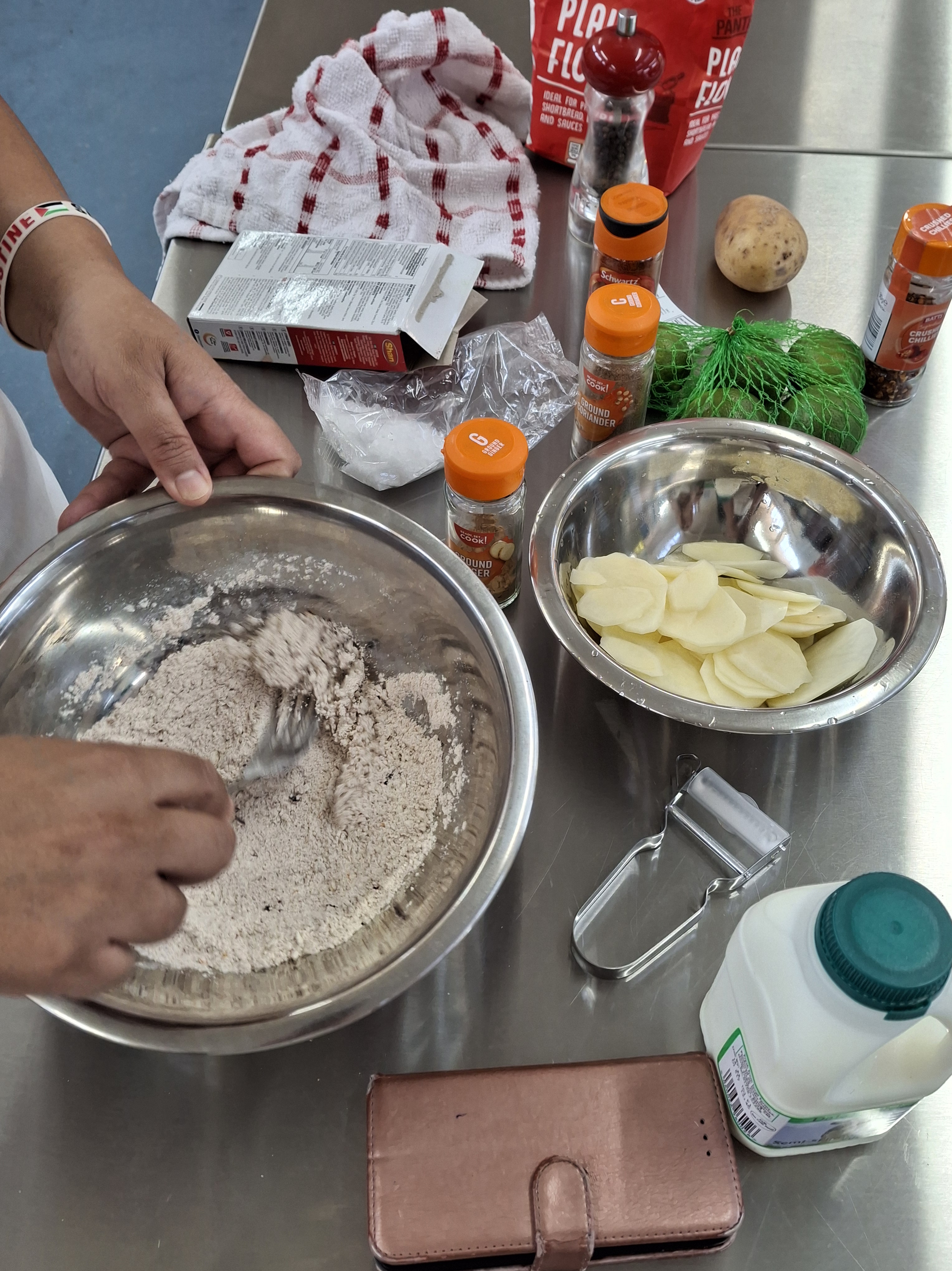
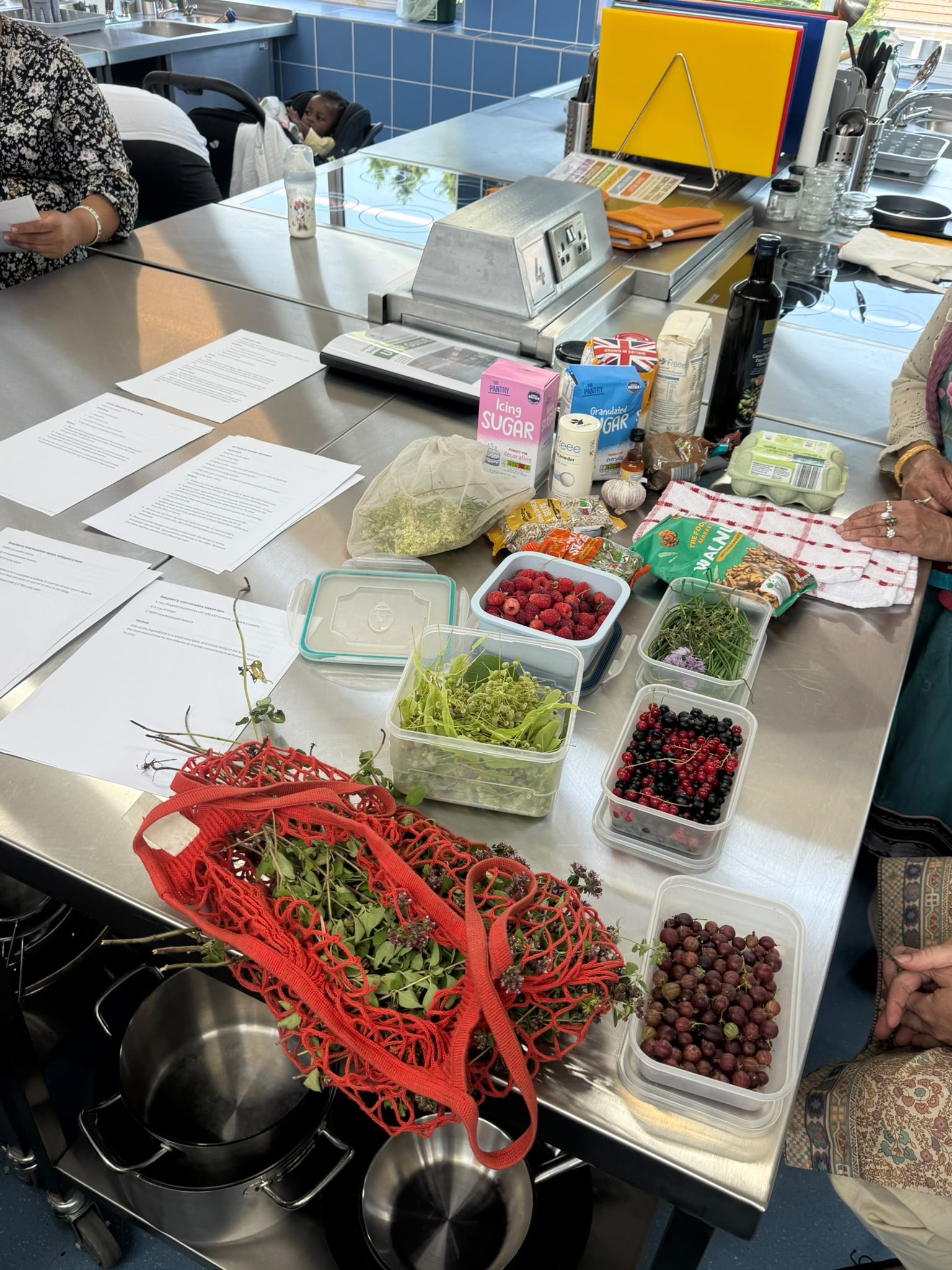
We hired the test kitchen at Tod College for the afternoon. The group looked through the recipes and decided what recipe they wanted to focus on, and they prepared all the ingredients for cooking.
Some of the recipes were very basic in terms of their instructions, so it was a little bit of guess work or keeping an eye on the oven or hob.
All of the recipes turned out really well:
Black pea soup was delicious and a lot of the group said that it was nutritious and felt like something you might like in the winter months, or when you might be feeling under the weather. It was also suggested that this could be adapted to add meat if people wished.
The Pan Haggerty was tasty, it was layers of potato, onion and Lancashire cheese, simple ingredients slow cooked in a skillet. It gave it a nice smoky taste, with soft but crispy potatoes. It was suggested that this could be a side dish or small plate on the menu.
The Black Peas is a local dish that would have been enjoyed on celebrations such as bonfire night. We tested a few different preparations of the peas to see how they could be adapted. We tried the classic peas and vinegar, chilli and lime, Chinese five spice and Chaat Masala.
Suggestions from the group were that these could be adapted in many ways and could go in a salad, be a side dish, be added to a soup or turned into a dip. It was agreed that it should be included on the menu, definitely around Bonfire Night if not year-round.
To wash down all the savoury items the last thing to taste was the gingerbread. This was more of a ginger cake. It was a dense but fluffy texture. The group thought it was tasty and would be a good addition for the menu however it was agreed that it felt like a winter dessert, and that it should be served with hot custard or cream.
The recipe group enjoyed the day, and it was great to cook recipes that were over a hundred years old or more. We have some firm favourites for the menu when the Dining Room opens. We will run another one of these sessions in the future to test out some other items from Lorraine’s personal cookbook that will also be on display in our school dinners case.