Go to slide:
- 1
- 2
- 3
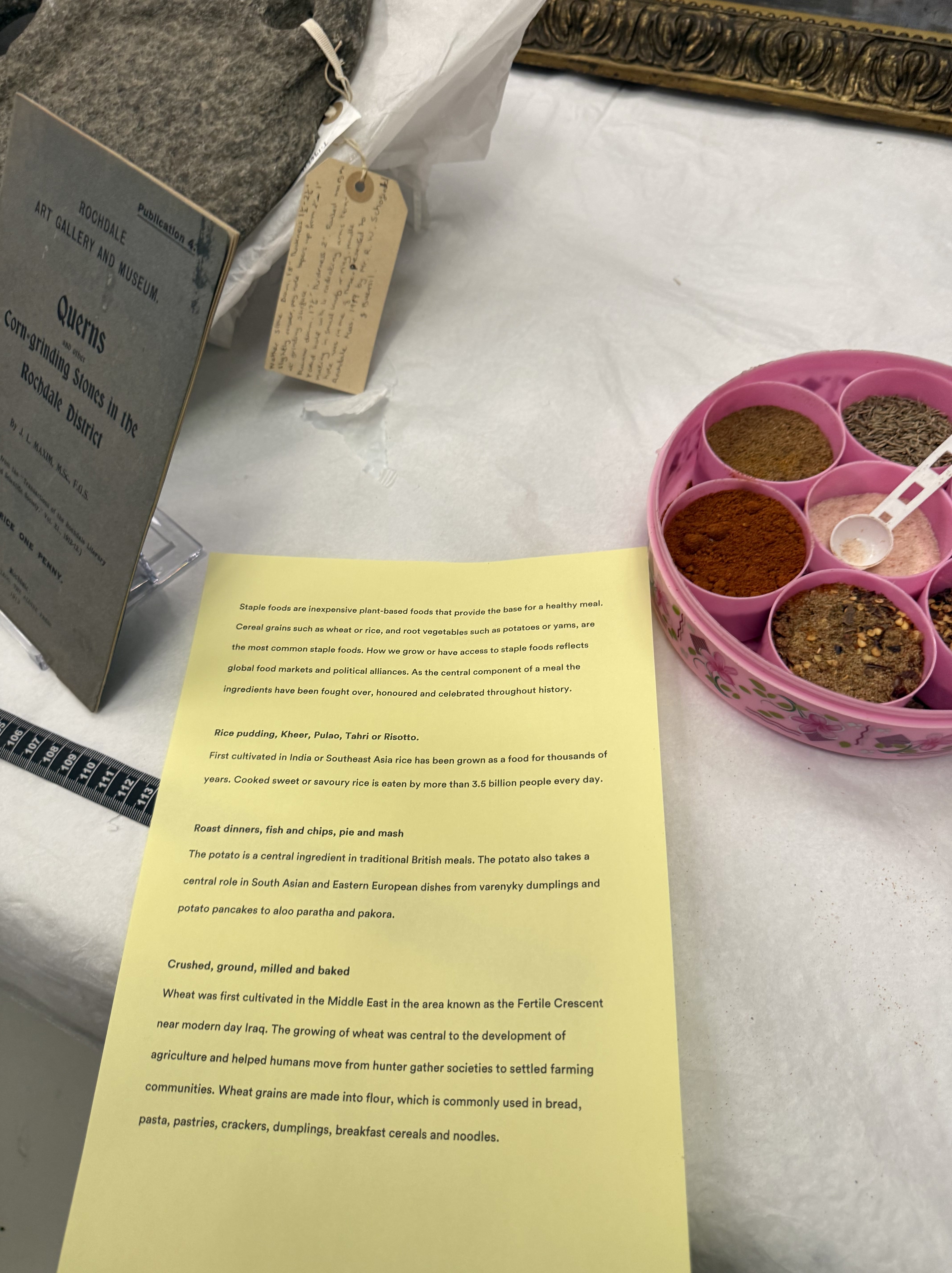
From talking about different dishes and the regular recipes we all cook, the group developed a museum display exploring the theme of staple foods. Staple foods are inexpensive plant-based foods that provide the base for a healthy meal. Cereal grains such as wheat or rice, and root vegetables such as potatoes or yams, are the most common staple foods. Such foods are used across countries and cultures, for example the potato is grown and cooked across the globe from fish and chips to aloo gobi and varenyky. The everyday ingredient was even viewed as sacred in Peruvian societies with its own Inca Goddess.
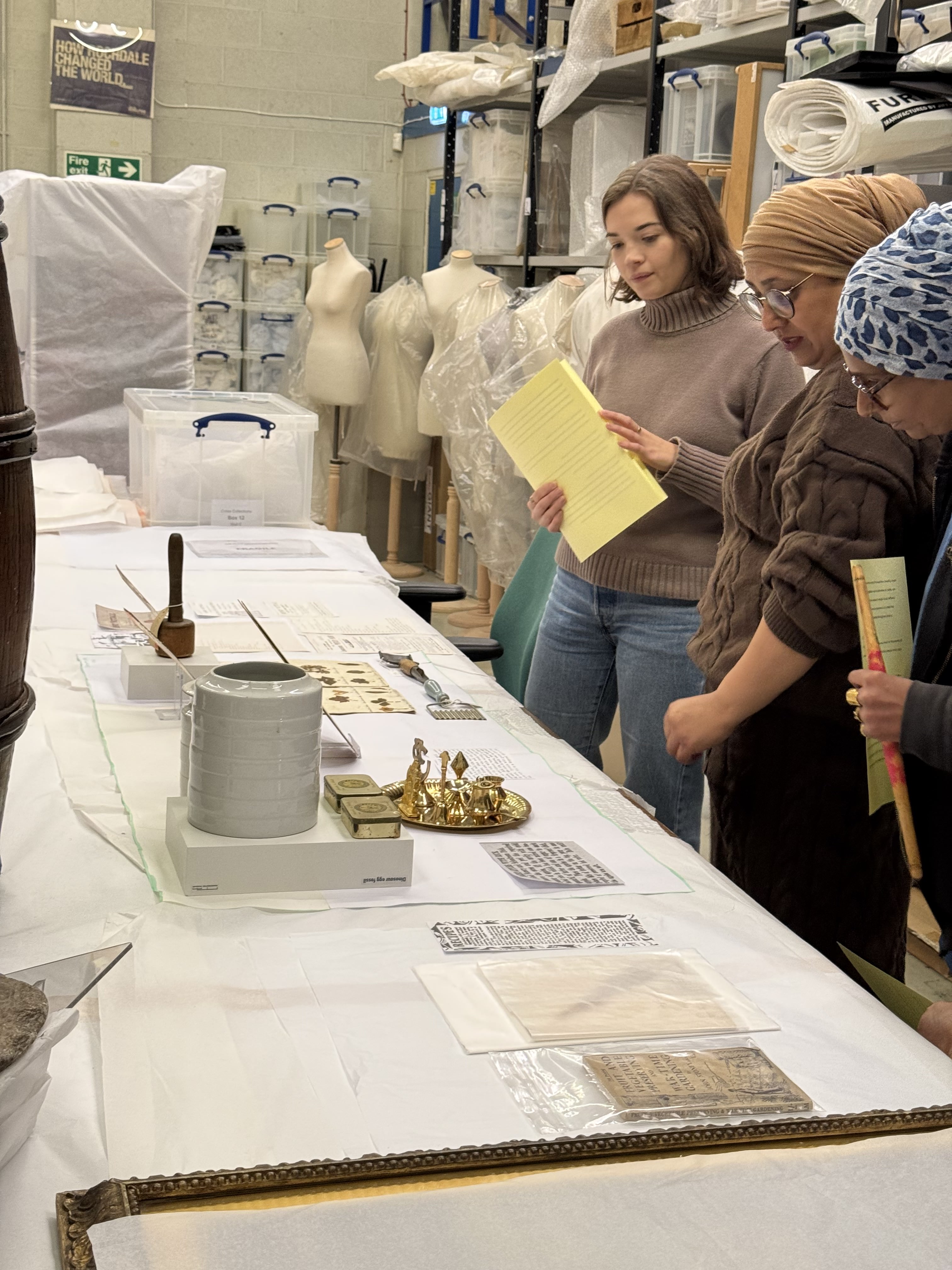
Exploring the museum collection we have brought together a wide range of different objects that reflect the universal use of rice, wheat and potatoes. As we discussed the collection objects the group also shared their own recipes and items of cookware that they use to prepare staple ingredients. One member of the group brought in a Nigerian pestle and mortar used to pound cooked yam (a root vegetable) into a soft stretchy dough that is eaten with stew. Another shared a metal form for making Aloo Tikka, small round potato cakes.
How we grow or have access to staple foods also reflects global food markets and political alliances. As the central component of a meal the ingredients have been fought over, honoured and celebrated throughout history. In Touchstones museum collection there are items relating to local harvest celebrations as well as the corn Laws and the resulting food shortages in working class mill town communities. The Corn Laws were tariffs and other trade restrictions on imported food and corn enforced in the United Kingdom between 1815 and 1846. The laws were designed to keep corn prices high to favour domestic farmers, and blocked the import of cheap corn, even when food supplies were short. The high prices benefitted land owners and caused widespread hunger in working communities.